How to Calculate Gravel for a Driveway
By the TapeMeasureCalc team · Updated · 7 min read
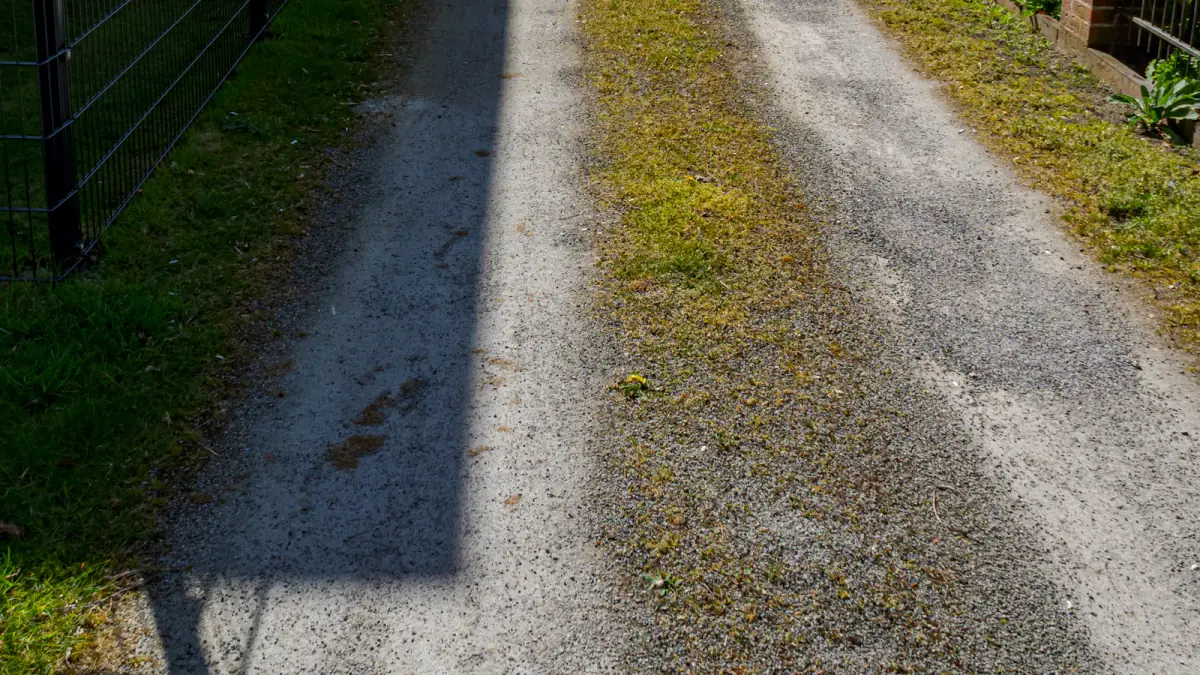
A gravel driveway is usually built in layers, and each layer is ordered separately. This guide walks through measuring the driveway, working out the volume of each layer, converting to tons or tonnes, and allowing for compaction.
Measure the driveway
Measure the length along the centre line and the width at several points. If the width varies, use the average. For a driveway with a turning area or parking pad, treat each part as its own rectangle and add the areas.
Example: a driveway 60 ft long and 12 ft wide has an area of 720 sq ft. In metric, an 18 m × 3.6 m driveway is 64.8 m².
Plan the layers
Most gravel driveways have a base of coarser, angular stone that compacts into a firm layer, topped by a surface layer of smaller stone. Some also use a geotextile fabric over the prepared soil to keep stone and soil separate.
How deep each layer should be depends on soil type, drainage, climate and vehicle weight. Soft or clay soils and heavier vehicles need a deeper base. Ask a local supplier or contractor for the build-up they use in your area; this guide uses example depths only to show the calculation.
Calculate the volume of each layer
Volume (yd³) = Area (sq ft) × Depth (in) ÷ 12 ÷ 27
Using the 720 sq ft driveway with an example 4 in base and 2 in surface layer:
- Base: 720 × 4 ÷ 12 = 240 ft³ = 8.89 yd³
- Surface: 720 × 2 ÷ 12 = 120 ft³ = 4.44 yd³
In metric, multiply the area by the depth in metres: 64.8 m² × 0.10 m = 6.48 m³ of base, and 64.8 × 0.05 = 3.24 m³ of surface stone.
Allow for compaction
Stone is measured loose in the truck but compacted on site, so it ends up taking less room than it did on delivery. Materials with fines, such as crusher run or MOT Type 1, compact the most. Add an allowance for this. Suppliers can tell you what they recommend for their material. The gravel calculator has a field for it, set to 5% by default.
Convert cubic yards to tons
Quarries often sell by weight. Convert using the material’s bulk density:
Weight = Volume × Density
Densities vary with stone type, size and moisture. Dry gravel is often somewhere around 1.3–1.5 US tons per cubic yard (roughly 1.5–1.7 tonnes per cubic metre). Using an assumed 1.4 US tons per yd³, the 8.89 yd³ base weighs about 12.4 US tons. Always ask the supplier for their own conversion figure.
Watch the units: a US (short) ton is 2,000 lb, while a metric tonne is 1,000 kg, about 10% heavier. UK, Canadian and Australian suppliers quote tonnes.
Edges, drainage and top-ups
- Edging keeps gravel on the driveway and reduces how much you lose to lawns and beds.
- A slight crown or cross-fall helps water run off rather than soaking the base.
- Expect to top up the surface layer over time as stone is pushed aside or pressed in.
Use the calculator
The gravel calculator does this for each layer: it gives cubic yards, cubic metres and estimated weight in tons and tonnes, with editable density and price per ton, tonne or cubic yard. For a paved driveway or patio, the paver calculator includes base and bedding sand, and the cubic yard calculator handles any other volume.